Avatar scuti

Formerly at scuti@teknik.io.

Read the blogroll.

I keep notes on git.

51 notes

Antares writes about a Japanese game titled Sakuna of Rice and Ruin.

antares.neocities.org

[Review] Sakuna of Rice and Ruin

Antares forces a princess of child-like stature to toil in manual labor and sets the language of her complaints to Japanese. (Review of a hybrid farming sim and platformer.)

#blogroll

[reply]

mi kurji lo gerku.i le gerku cu nitcu ci prenu pu le nu stuvi'e le panka.i

#lojban

[reply]

Some girl takes my unimpressive looking gift from the gifts table:

"Oh! It's Steam!"

(A Steam wallet card.)

"Ooh, Steam," a few others notice.

"... What's Steam?" the hostess says, looking a bit confused.

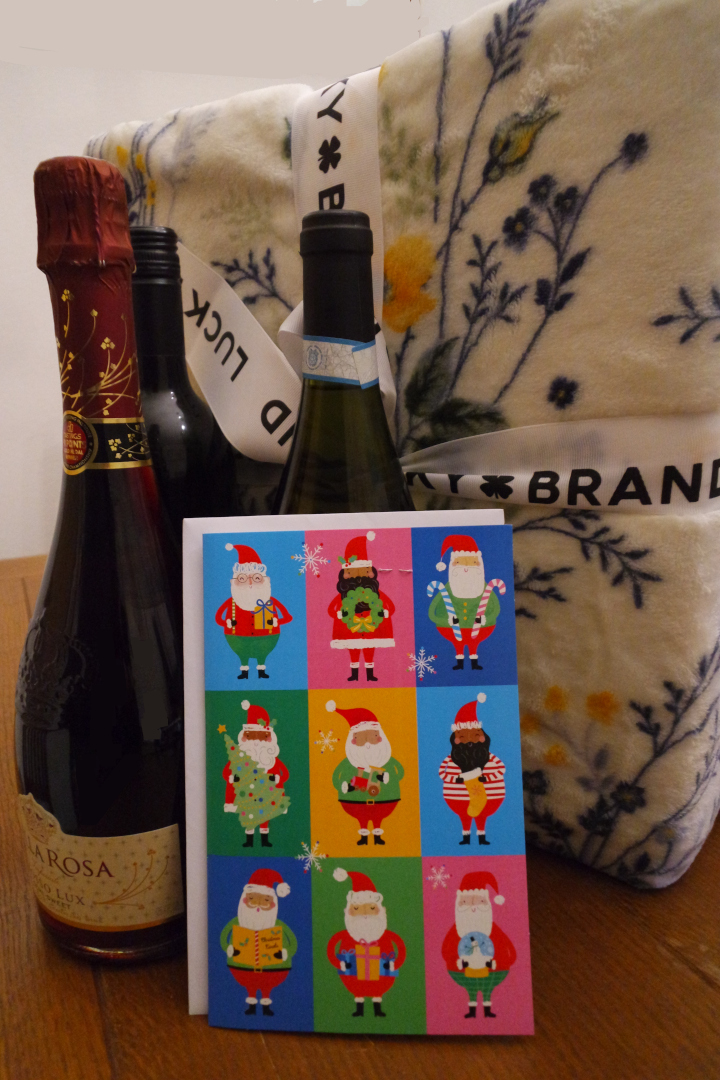
(I played white elephant.) Also what I got from a Christmas party:

  1. a soft blanket
  2. three bottles of alcohol (more than I can drink on my own)
  3. a card with Santa Claus on it
  4. a candy bag (not in photo, eaten)
[reply]

Today, I read into yes/no questions. Since the community is small, it is reasonable to ask if there are active or online users.

https://jbovlaste.lojban.org/dict/sampli

https://jbovlaste.lojban.org/natlang/en/active

https://jbovlaste.lojban.org/natlang/en/idle

I couldn't find a definition for 'online'.

"lo sampli cu .akti."

(A user is active.)

"xu lo sampli cu .akti."

(Is a user active?)

'xu' is an interjection that indicates a question, so question marks are not necessary. 'xu' can be placed anywhere in a sentence.

"lo xu sampli cu .akti"

(Is any user active?)

"lo sampli xu cu .akti."

(Is it a user that is active?)

"lo sampli cu .akti xu."

(A user, is he or she active?)

#lojban

[reply]

Mon ami français s'est connecté au serveur Minetest. Il habite dans une cabane distante de la ville. Avant, il a acheté des provisions, mais aujourd'hui, il creé une ferme.

Underlined are words or phrases of the day.

  • Je vais agrandir la cabane. Elle devient trops petite.
  • La fois prochaine, je me mettrai à la recherche de semence.
  • Ah oui. Comment on fait pour récupéré une ruche ?

In English:

  • I am going to expand the cabin. It became too small.
  • (rough) Next time, I am putting myself to search for seeds.
  • Ah yes. How does one recover a (bee)hive?

(Minetest spawns bee nests on trees given a simple rule regardless of biome or proximity to flowers. He lives in a savannah where flowers don't grow. So when bee nests spawn on trees, the colony dies.)

#minetest #francais

[reply]

Hier soir, je joué Minetest avec quelqu'un de France. Some noteworthy sentences:

  1. Je suis déjà mort deux fois. mais pour l'instant je suis en bonne santé.
  2. On peut en faire quelque chose les toiles d'arraignée ?
  3. Il ne vaut mieux pas tomber là dedans. On ne retrouverait meme pas les os.

meaning

  1. I already died twice, but for the moment, I am in good health.
  2. We can do something about the webs of spiders? (We found webs made by monsterous spiders.)
  3. It is better not to fall in there. We wouldn't even recover the bones. (We found a lava lake.)

The third sentence is an odd phrase that doesn't follow the general rule in that "ne ... pas" wraps around the verb ("faut"); instead, "faut mieux" is negated.

Another way to write "it's better not (to fall)" is

"il vaut mieux ne pas (tomber)".

In this case, the infinitive is just negated with "ne...pas" preceding it.

#minetest #francais

[reply]

The Lojban dictionary gives the following definition for the word "tu'a".

tu'a — extracts a concrete sumti from an unspecified abstraction; equivalent to le nu/su'u [sumti] co'e.

The definition is difficult to understand, and most Lojban dictionaries do not have example sentences. The word was necessary to express:

"I practice more than one language."

Which translates to:

micrezenzu'eta'uza'upabangu
Ipracticemore thanonelanguage

A very nice person gave me another example to help me understand the word.

"I try the door."

In a natural language, this can be interpreted as trying to open the door. Someone in real life stands in front of a door with a hand on the handle, what that someone is attempting to do can be inferred by the function of a door. However, Lojban is more literal.

"mi troci lo nu kargau le vorme"

(I try to open the door.)

"tu'a" leaves the specific activity to be inferred.

"mi troci tu'a le vorme."

(I try [something related to] the door.)

#lojban

[reply]

I found this webpage for learning Lojban. Today, I read to the part about numbers.

https://lojban.pw/books/learn-lojban

In parenthesis are words that would make the sentence more complex than I am able to translate to Lojban.

EnglishLojbanFrench
I ate two apples (today).mi pu citka re pliseJ'ai mangé deux pommes (aujourd'hui)
I practice more than one language (at a time).mi crezenzu'e tu'a(?) za'u pa bangu.Je pratique plus d'un langue (à la fois).
I bought less than 14 items (from the store).mi pu erve me'i pa vo dacti.J'ai acheté moins de quartorze objets (du boutique).

I initially came up with mi crezenzu'e za'u pa bangu. A user had said that the second place of "crezenzu'e" must be an activity which a quantity of language does not satisfy.

#lojban #francais

[reply]

This is a syntactic parser for Lojban to verify sentences.

https://lojban.github.io/ilmentufa/camxes.html

(I don't have a human tutor or a English-Lojban machine translator.) There is little explanation in the output, but I somewhat figured it out.

A Lojban video gave three example sentences; one of which is valid but does not make sense.

LojbanTokenization by ParserEnglish
1mi mlatu([mi CU] [mlatu VAU])I am a cat
2mi mlatu lo jutrperjan([mi CU] [mlatu {<lo jutrperja KU> VAU}])I am a cat of breed Persian
3mi mlatu jutrperjan([mi CU] [{mlatu jutrperja} VAU])I am "cat Persian breed"

My interpretation:

'mlatu' is a 'selbri' (relation) that means "x is a cat breed of y".

  1. x = 'mi' (I/me)
  2. x = 'mi' (I/me), y = 'lo jutrperjan' (a Persian)
  3. x = 'mi'; without 'lo' the selbri 'mlatu' is now compound with 'jutrperjan'

#lojban

[reply]

I watched a video about Lojban.

https://yewtu.be/watch?v=KgxOrTvpWJ4

Based on the information in the video, I tried translating "I watched a video about Lojban" to Lojban. As the language is not structured around nouns and verbs but relations, I broke my sentence into two components.

ArgumentsEnglishLojban
I, videoI watched a videomi pu mencti lo skina
video, Lojbanthis video is about Lojbanti skina lo jbobau

I tried forming the sentence: mi pu mencti skina lo jbobau

But I'm not confident in combining "skina" (x1 is a video/film about x2 by filmmaker x3 for audience x4) and "mencti" (c1 mentally consumes c2) into a compound relation. But I found someone to ask. Their answer:

it should be something like "mi pu mencti le jbobau skina" or "mi pu mencti le skina pe le jbobau"

#lojban

[reply]
[microblog.py]